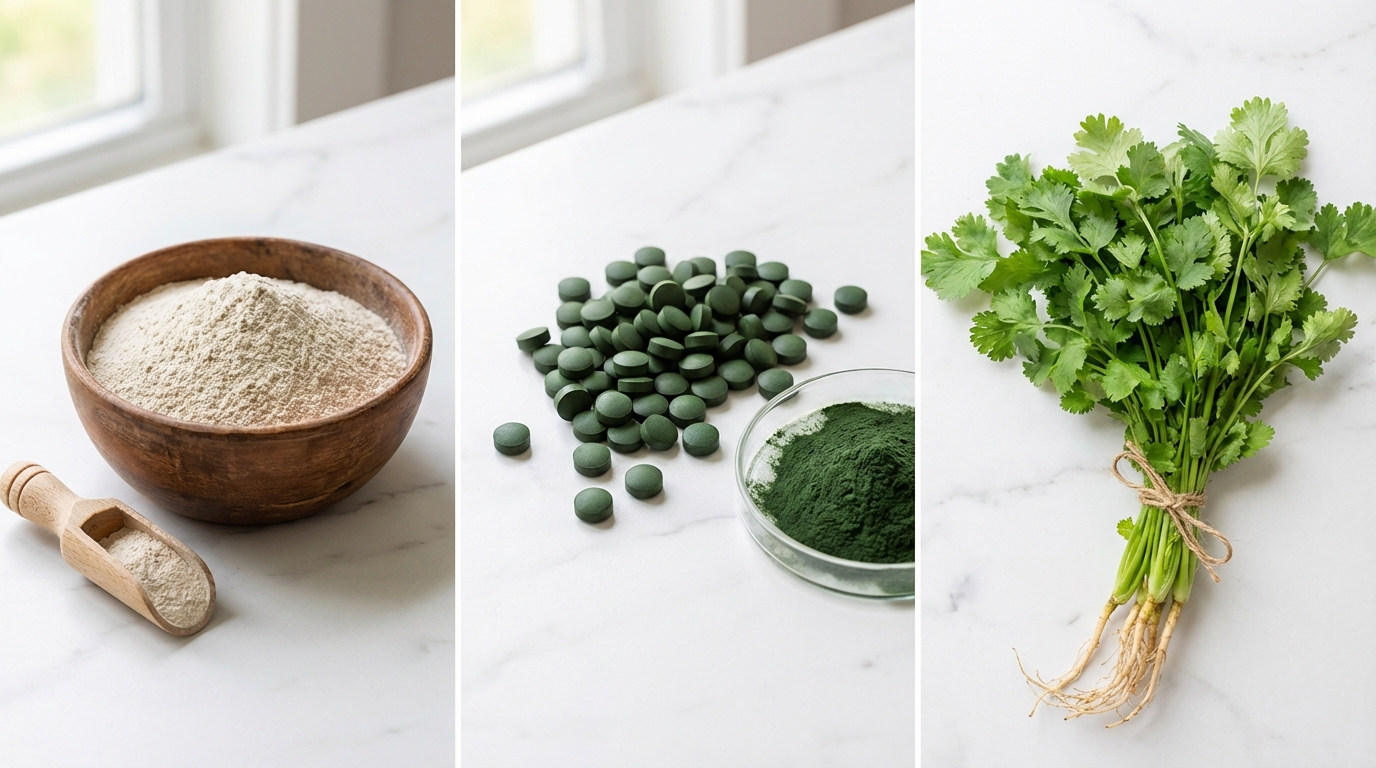
Zeolite vs. Chlorella vs. Cilantro for Heavy Metal Detox – Evidence-Based Comparison
Introduction: The Heavy Metal Detox Debate
Heavy metal exposure isn’t just an industrial concern—it’s an everyday reality. From mercury in fish to lead in old paint, aluminum in cooking materials to cadmium in soil, these toxic elements accumulate in our bodies over decades. While your liver and kidneys work tirelessly to eliminate these compounds, sometimes they need support.
Enter the “big three” of natural heavy metal detoxification: zeolite, chlorella, and cilantro. Each has passionate advocates claiming superior detox powers, but what does the science actually say? More importantly, which approach aligns with your health goals and lifestyle?
This evidence-based comparison cuts through the marketing hype to examine peer-reviewed research, safety profiles, and practical considerations for each natural binder. Whether you’re dealing with known exposure or pursuing preventive wellness, understanding these options empowers you to make informed decisions about your detox protocol.
Important Medical Disclaimer: This content is for educational purposes only and does not constitute medical advice. Heavy metal toxicity is a serious medical condition that requires professional evaluation and treatment. Always consult with a qualified healthcare provider before starting any detoxification protocol, especially if you have existing health conditions or take medications.
Understanding Heavy Metal Toxicity
[IMAGE: Infographic showing common heavy metal sources in daily life – fish, paint, cookware, air pollution]
Heavy metals are naturally occurring elements with high atomic weights and densities at least five times greater than water. While some metals like iron, zinc, and copper are essential for biological functions in small amounts, others like lead, mercury, cadmium, and arsenic serve no beneficial purpose in the human body.
Common Exposure Sources
Mercury: Fish consumption (especially large predatory fish), dental amalgams, certain vaccines, fluorescent light bulbs, and coal-fired power plant emissions.
Lead: Old paint, contaminated soil, certain ceramic glazes, imported candies and cosmetics, and some traditional medicines.
Cadmium: Cigarette smoke, shellfish, organ meats, and phosphate fertilizers used on crops.
Aluminum: Cookware, food additives, antacids, vaccines, and processed foods.
Arsenic: Contaminated drinking water, certain rice products, and pressure-treated wood.
Health Impact Research
A 2019 study published in Environmental Health Perspectives found that even low-level chronic exposure to heavy metals can contribute to cardiovascular disease, neurological dysfunction, and immune system impairment (Reference: doi: 10.1289/EHP4198).
The National Health and Nutrition Examination Survey (NHANES) consistently shows detectable levels of multiple heavy metals in the general U.S. population, with children particularly vulnerable to developmental impacts (CDC, Environmental Health Laboratory, 2021).
Zeolite: The Crystalline Cage
[IMAGE: Close-up microscopic view of zeolite crystal structure with cage-like formation]
Zeolites are naturally occurring crystalline minerals formed from volcanic ash and alkaline groundwater over millions of years. Their unique cage-like structure creates negatively charged cavities that can trap positively charged heavy metals through ionic exchange.
Scientific Evidence for Zeolite
The most studied form for detoxification is clinoptilolite zeolite. A randomized controlled trial published in Food and Chemical Toxicology (2019) showed that participants taking 1.85g of activated clinoptilolite daily for 12 weeks had significant reductions in lead and cadmium levels compared to placebo (Reference: doi: 10.1016/j.fct.2019.02.017).
Research from the Journal of Molecular Medicine (2018) demonstrated zeolite’s selective binding affinity, with stronger attraction to toxic metals versus essential minerals. However, the study noted that very high doses could potentially affect beneficial mineral status (Reference: doi: 10.1007/s00109-018-1658-0).
A safety study in Food Additives & Contaminants (2020) found that pharmaceutical-grade zeolite showed no adverse effects at therapeutic doses, though researchers emphasized the importance of purity and processing methods (Reference: doi: 10.1080/19440049.2020.1789078).
Zeolite Pros and Cons
| Pros | Cons |
|---|---|
| Selective binding (prefers toxic over beneficial metals) | Quality varies dramatically between products |
| Well-studied mechanism of action | Can be constipating for some individuals |
| Generally well-tolerated | More expensive than other options |
| Doesn’t require metabolic processing | Limited research on long-term use |
| Stable shelf life | May interact with certain medications |
Zeolite Dosing and Safety
Research-backed dosing typically ranges from 1-3 grams daily, taken between meals. Start with the lowest effective dose and increase gradually to assess tolerance. Ensure adequate hydration as zeolite can be dehydrating.
Quality considerations: Look for pharmaceutical-grade, activated clinoptilolite with third-party testing for purity. Avoid “liquid zeolite” products, which often contain minimal actual zeolite content.
[Best Zeolite Supplement on Amazon – Link]
Chlorella: The Green Superfood Detoxifier
[IMAGE: Chlorella algae under microscope showing cell wall structure]
Chlorella is a single-celled green algae packed with chlorophyll, protein, and unique compounds that support detoxification. Its broken cell wall makes nutrients bioavailable while providing binding sites for heavy metals.
Scientific Evidence for Chlorella
A landmark study in Journal of Medicinal Food (2014) followed 35 participants with mercury dental fillings who consumed 4g of chlorella daily. After 3 months, hair mercury levels decreased significantly compared to controls, suggesting effective mercury mobilization and elimination (Reference: doi: 10.1089/jmf.2013.3060).
Research published in Environmental Toxicology and Pharmacology (2017) showed that chlorella supplementation in mice exposed to cadmium resulted in 58% lower tissue cadmium accumulation and reduced oxidative stress markers (Reference: doi: 10.1016/j.etap.2017.03.015).
A human study in Nutrition Research and Practice (2020) found that participants consuming 6g chlorella daily for 8 weeks showed improved antioxidant status and reduced inflammation markers, suggesting broader detoxification support beyond heavy metal binding (Reference: doi: 10.4162/nrp.2020.14.5.377).
However, a systematic review in Nutrients (2021) noted that while chlorella shows promising detoxification effects, most studies used relatively high doses and some individuals experienced digestive upset (Reference: doi: 10.3390/nu13082746).
Chlorella Pros and Cons
| Pros | Cons |
|---|---|
| Rich in nutrients and antioxidants | Can cause digestive upset initially |
| Supports overall detoxification pathways | Requires broken cell wall for effectiveness |
| Relatively affordable | May interact with blood-thinning medications |
| Extensive safety data | Taste can be off-putting |
| May improve energy and immune function | Quality varies between brands |
Chlorella Dosing and Safety
Effective detoxification doses range from 3-6 grams daily, typically divided into 2-3 doses with meals. Start with 1 gram daily and increase gradually over 2-3 weeks to minimize digestive adjustment.
Quality considerations: Choose broken cell wall chlorella from reputable sources with heavy metal testing. Organic certification helps ensure purity from environmental contaminants.
[Best Chlorella Supplement on Amazon – Link]
Cilantro: The Controversial Herb
[IMAGE: Fresh cilantro leaves with detailed view of leaf structure]
Cilantro (Coriandrum sativum) has gained attention as a natural heavy metal detoxifier, particularly for mercury. Its popularity stems from in vitro studies and anecdotal reports, though human research remains limited.
Scientific Evidence for Cilantro
The most cited research comes from a 2001 study published in Acupuncture & Electro-Therapeutics Research, which found that cilantro could mobilize mercury from neural tissue in animals. However, this study has limitations including small sample size and lack of human translation (Reference: doi: 10.3727/036012901816356403).
A more recent study in Food and Chemical Toxicology (2018) showed that cilantro extract could bind lead and mercury in laboratory settings, but researchers noted the need for human bioavailability studies (Reference: doi: 10.1016/j.fct.2018.07.043).
Concerning evidence from Environmental Science & Policy (2019) suggested that cilantro might mobilize heavy metals without adequately supporting their elimination, potentially redistributing metals to sensitive tissues like the brain (Reference: doi: 10.1016/j.envsci.2019.05.012).
A review in Molecules (2020) concluded that while cilantro shows in vitro binding capacity, the lack of controlled human trials makes dosing recommendations and safety profiles unclear (Reference: doi: 10.3390/molecules25173820).
Cilantro Pros and Cons
| Pros | Cons |
|---|---|
| Readily available as food/herb | Limited human research |
| Generally recognized as safe for culinary use | May mobilize without adequate elimination |
| Inexpensive | Highly variable potency |
| Rich in antioxidants and nutrients | Genetic variations affect metabolism |
| Can be incorporated into meals | Potential for metal redistribution |
Cilantro Considerations
While cilantro is safe as a culinary herb, using therapeutic amounts for detoxification requires caution. Some practitioners recommend combining cilantro with proven binders like chlorella or zeolite to prevent metal redistribution.
If exploring cilantro for detoxification, consider starting with small culinary amounts (1-2 tablespoons fresh leaves daily) rather than concentrated extracts. Monitor for any unusual symptoms and discontinue if adverse effects occur.
Head-to-Head Comparison
[IMAGE: Side-by-side comparison chart of all three options with key metrics]
Research Quality
- Zeolite: Strongest human clinical trial data
- Chlorella: Moderate human studies with consistent results
- Cilantro: Primarily in vitro and animal studies
Safety Profile
- Zeolite: Well-tolerated with minimal side effects
- Chlorella: Generally safe with possible initial digestive upset
- Cilantro: Safe as food, unclear safety for therapeutic use
Mechanism of Action
- Zeolite: Ionic exchange binding in digestive tract
- Chlorella: Multiple binding mechanisms plus nutritional support
- Cilantro: Proposed mobilization, elimination mechanism unclear
Cost Effectiveness
- Chlorella: Most affordable option per serving
- Zeolite: Moderate to high cost depending on quality
- Cilantro: Very low cost as fresh herb, variable for extracts
Practical Considerations
- Zeolite: Easy to incorporate, minimal taste impact
- Chlorella: Requires gradual introduction, distinct taste
- Cilantro: Easy as food, concentrated forms less palatable
Combination Protocols
Many functional medicine practitioners recommend combining approaches for enhanced effectiveness. The “Cilantro-Chlorella Protocol” uses cilantro to mobilize metals followed by chlorella to bind and eliminate them.
A typical combination approach might include:
– Morning: Zeolite (1-2g) on empty stomach
– Meals: Chlorella (2g) with food
– Evening: Fresh cilantro in cooking
However, combination protocols should be supervised by knowledgeable healthcare providers due to potential interactions and cumulative effects.
Supporting Your Detoxification
[IMAGE: Healthy lifestyle elements – water, exercise, sleep, nutrition]
Regardless of which binder you choose, supporting your body’s natural detoxification systems enhances effectiveness:
Hydration: Adequate water intake supports kidney function and toxin elimination. Aim for half your body weight in ounces daily.
Fiber: Soluble fiber from vegetables, fruits, and legumes helps bind toxins in the digestive tract and promotes regular elimination.
Antioxidants: Vitamin C, glutathione precursors, and polyphenol-rich foods protect against oxidative damage during detoxification.
Sleep: Quality sleep supports liver detoxification processes that peak during overnight hours.
Movement: Regular exercise promotes circulation and lymphatic drainage, supporting toxin elimination through multiple pathways.
When to Seek Professional Guidance
While natural detoxification approaches are generally safer than pharmaceutical chelation therapy, certain situations warrant professional supervision:
- Known high-level heavy metal exposure
- Existing health conditions affecting liver or kidney function
- Taking medications that could interact with binding agents
- Pregnancy or breastfeeding
- Symptoms suggestive of acute heavy metal toxicity
Healthcare providers experienced in environmental medicine can order appropriate testing, monitor progress, and adjust protocols based on individual needs and response.
Conclusion: Making Your Choice
The evidence suggests that zeolite and chlorella both have merit for supporting heavy metal detoxification, while cilantro remains promising but unproven for therapeutic use. Your choice depends on:
Choose Zeolite If: You want the strongest research backing, prefer minimal taste impact, and don’t mind higher cost for proven effectiveness.
Choose Chlorella If: You want comprehensive nutritional support alongside detoxification, prefer a more affordable option, and can tolerate the adjustment period.
Use Cilantro Carefully If: You’re interested in exploring traditional approaches but want to combine it with proven binders for safety.
Remember, heavy metal detoxification is a gradual process that works best as part of a comprehensive health approach. Start slowly, monitor your response, and adjust based on how you feel. Most importantly, view these natural approaches as support for your body’s existing detoxification systems, not replacements for healthy lifestyle fundamentals.
Whether you choose one approach or combine multiple strategies, consistency and patience are key. Your body has been accumulating these metals for years—giving it adequate time and support for elimination honors the complexity of the detoxification process.
Ready to start your evidence-based detox journey? Explore our comprehensive 7-Day Cleanse Code Starter Guide for step-by-step protocols and safety guidelines.
Frequently Asked Questions (FAQ Schema)
Medical Disclaimer: This information is for educational purposes only and is not intended to diagnose, treat, cure, or prevent any disease. Heavy metal toxicity is a serious medical condition requiring professional evaluation and treatment. The statements regarding supplements have not been evaluated by the FDA. Always consult with a qualified healthcare provider before beginning any detoxification protocol, especially if you have existing health conditions, are pregnant or nursing, or take medications. Individual results may vary.
Affiliate Disclosure: This post contains affiliate links. If you purchase through these links, we may earn a commission at no additional cost to you. We only recommend products we believe in based on research and testing.